
Latency
Inference, robotics and vision systems answer in milliseconds when the compute sits next to the machines and the people using it.
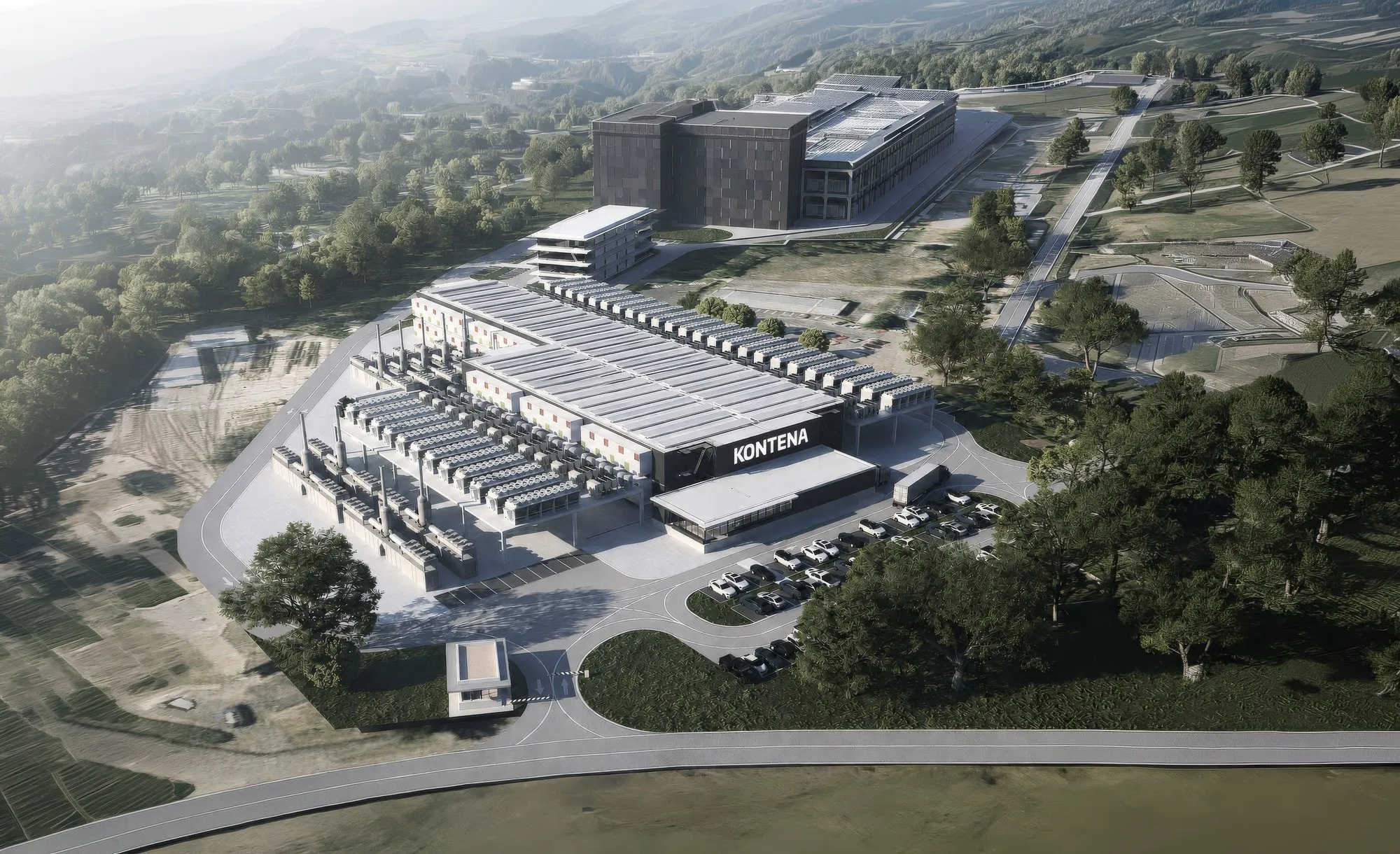
Modular data center solutions from a single cluster to a large campus, outdoors or inside an existing building. Every solution uses the same factory-built, FAT-tested blocks; what changes is the scale and the setting.
On your own plot.
Complete data centers on your own plot. Four ways, from a single cluster to a full campus.
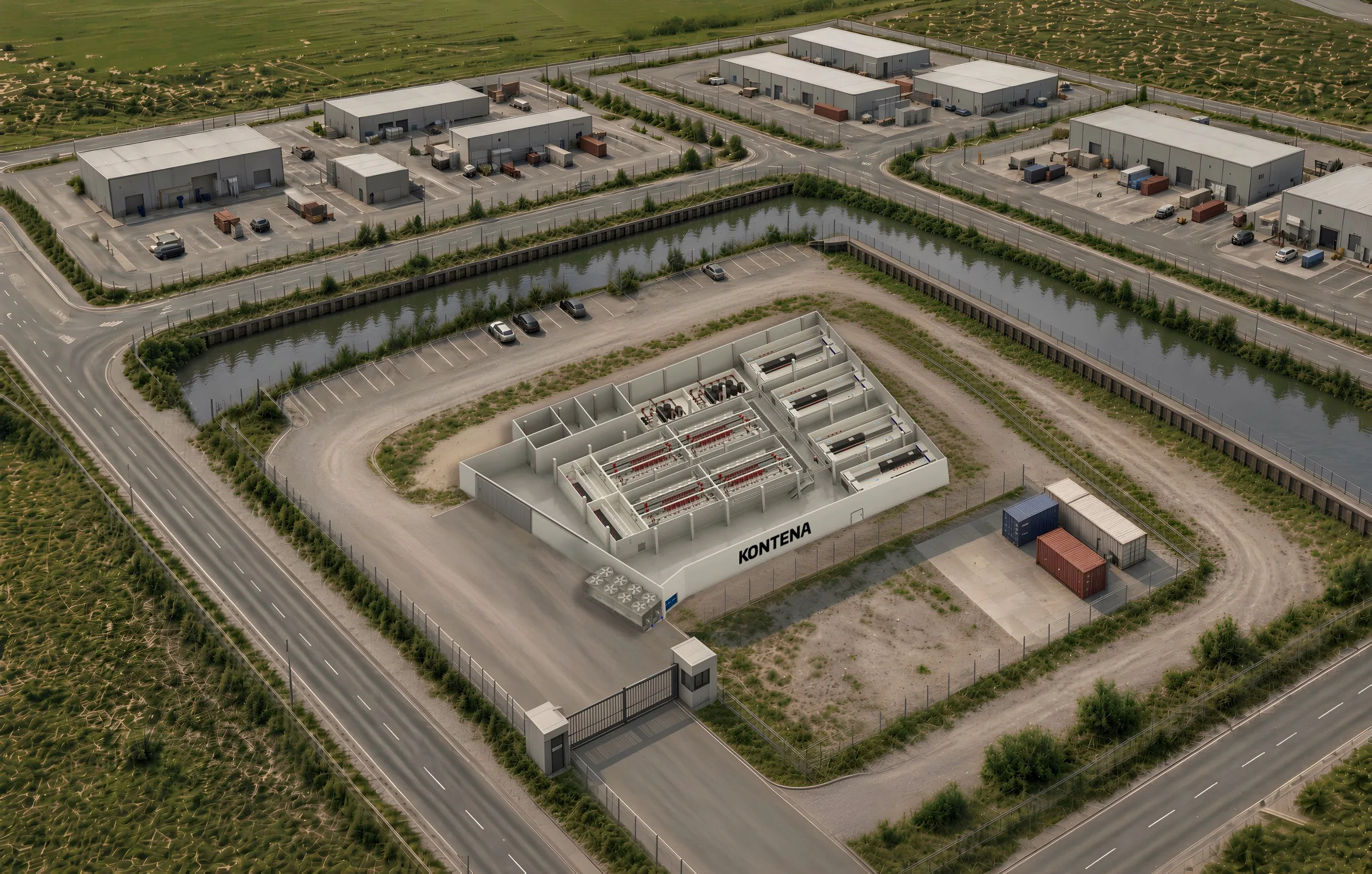
Inside a building.
The same engineering inside a building. Only the envelope is different.
Compute where you need it. Live in months, not years. Accelerated deployments for smaller, single clusters: a micro data center of about 1 MW of AI capacity, fully wired, piped and factory-acceptance-tested, ready to connect and run.
Outdoor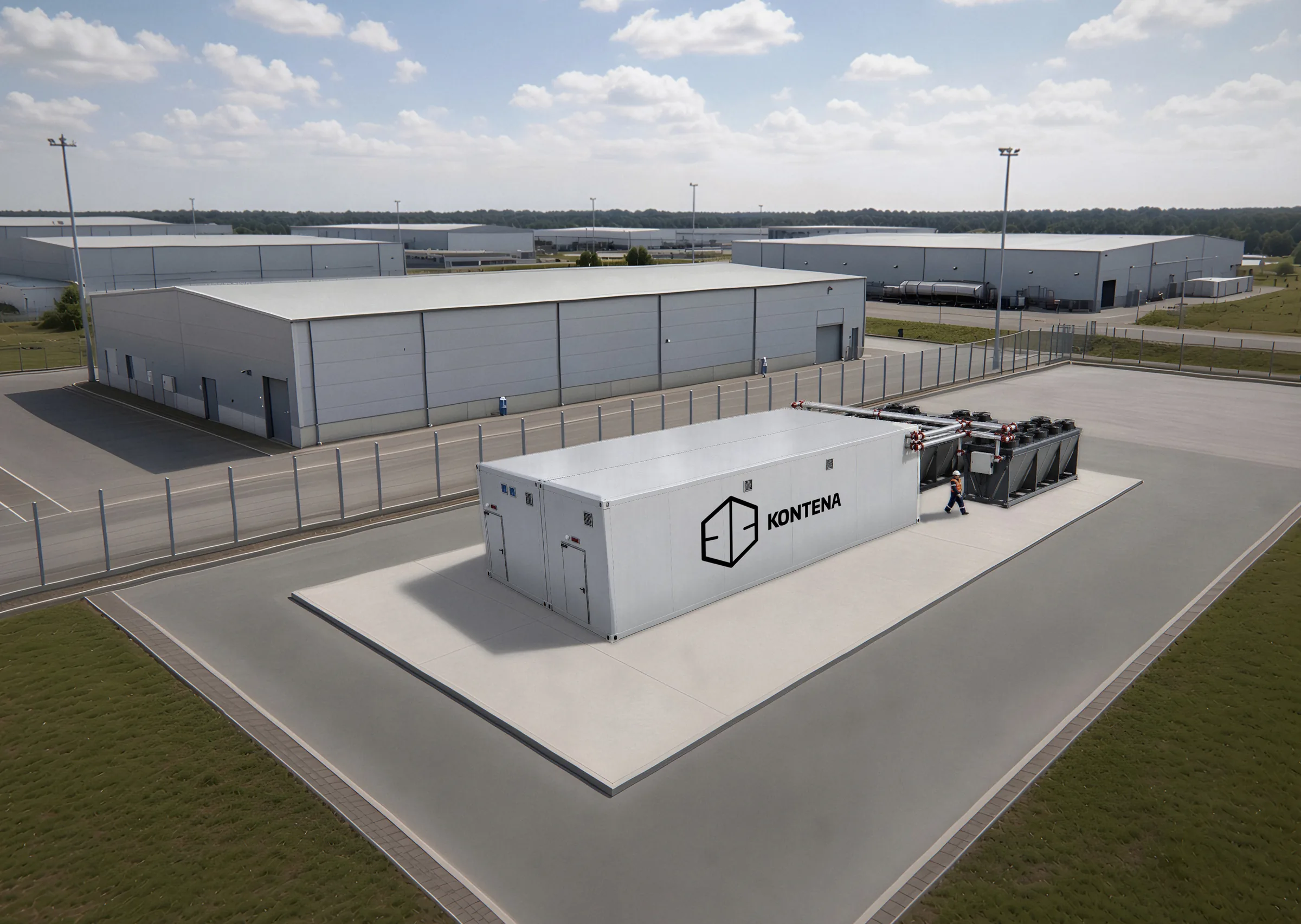
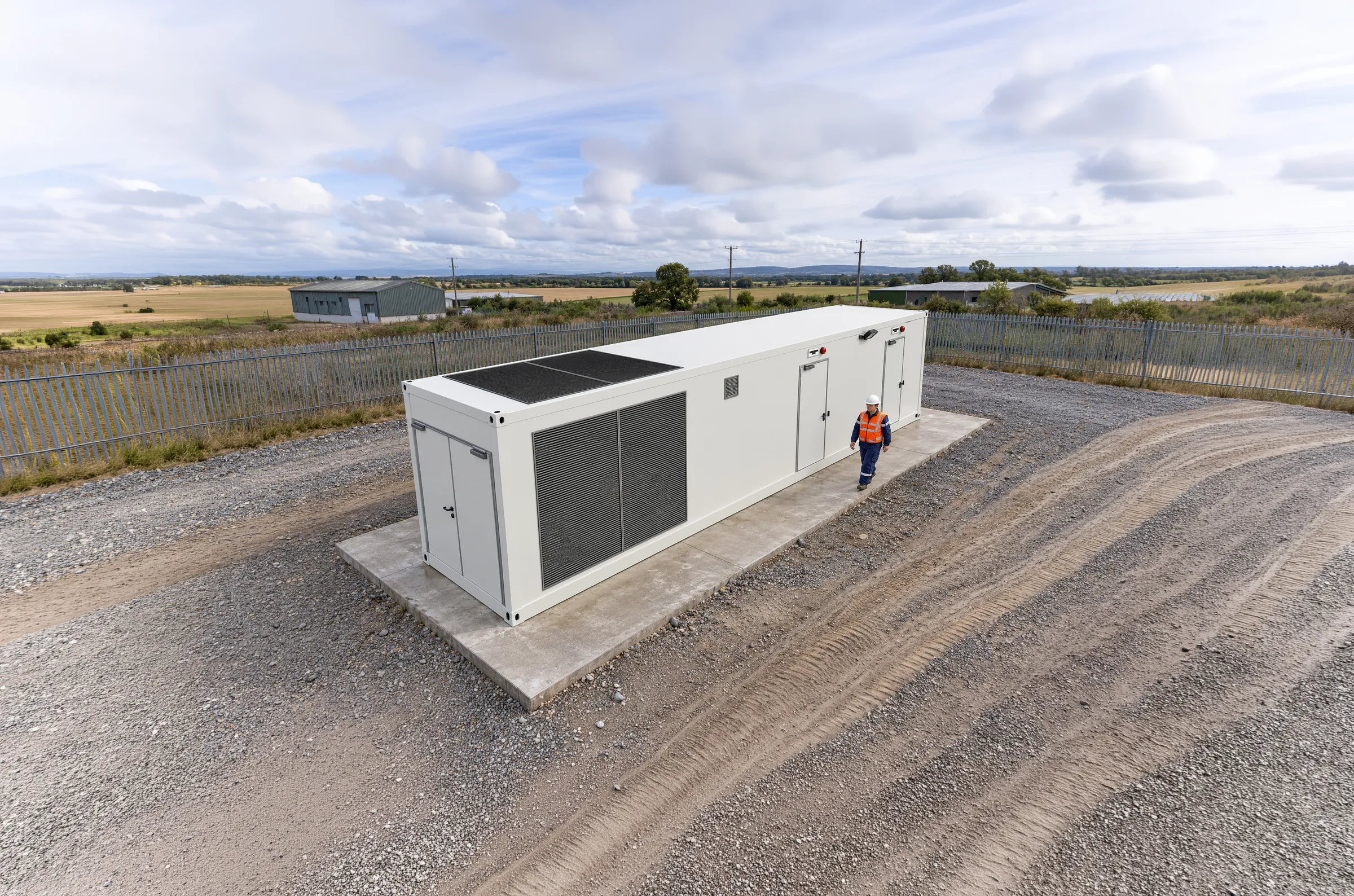
Some compute belongs next to the data it processes: for latency, for sovereignty, or because moving it costs more than housing it. Edge is a micro data center that brings ~1 MW of AI capacity to a factory floor, a campus or a remote site, fully wired, piped and factory-acceptance-tested, ready to connect and run.
Inference, robotics and vision systems answer in milliseconds when the compute sits next to the machines and the people using it.
Data that may not leave the site, the country or the company stays where it is, on hardware you control.
Sometimes moving the data costs more than housing the compute. Then the compute goes to the data.
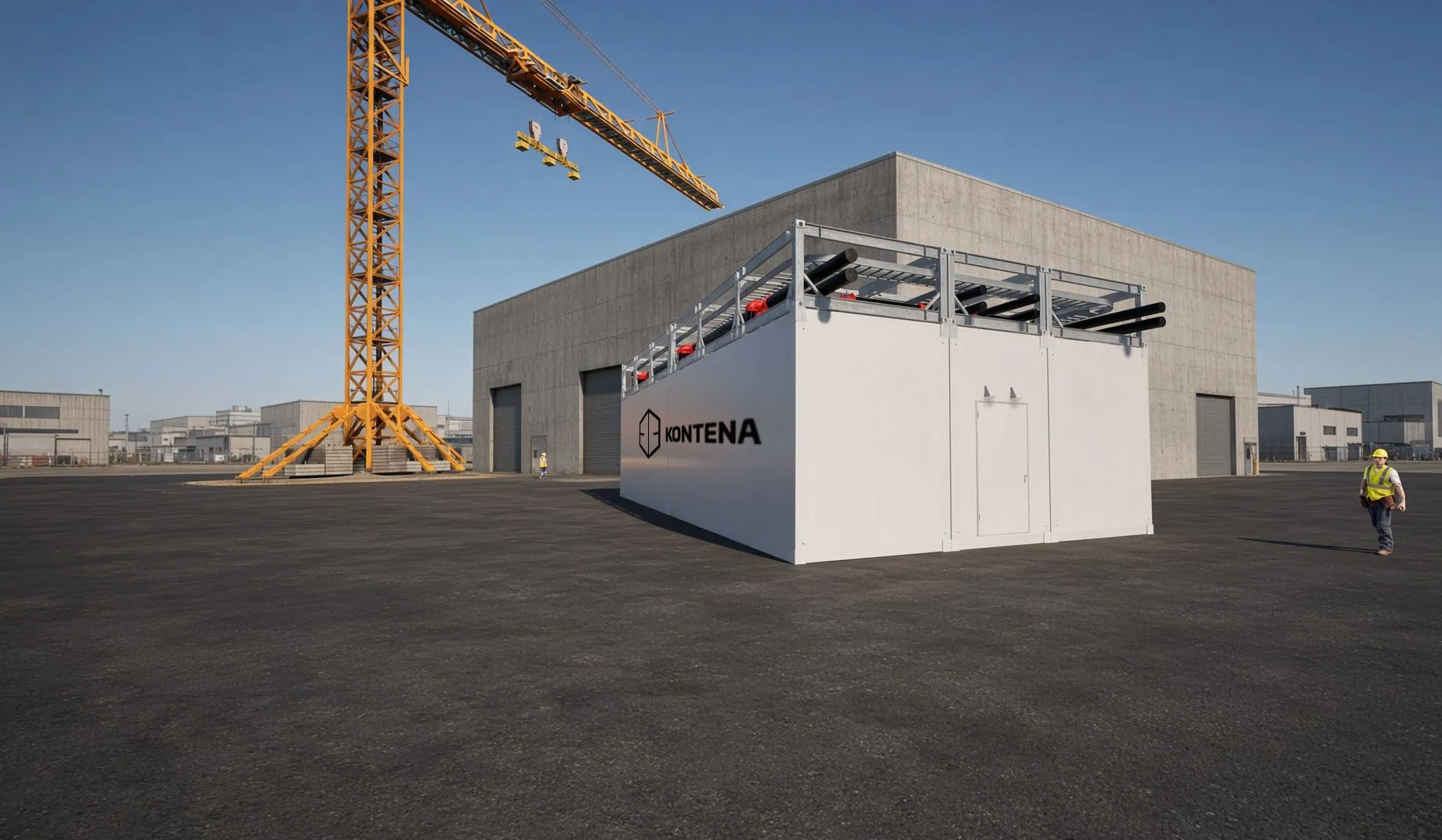
A full data center, not a stripped-down one: power, cooling, safety and access included, at the smallest size that still makes sense.
One factory-built hall with the racks, busways, piping and safety systems in place. Rack positions and density are set by your hardware.
Switchgear, UPS and distribution in a separate compartment inside the data room. Concurrently maintainable.
Dry coolers on the ground at the end of the hall, N+1. Direct liquid cooling or rear doors, as your racks need.
A full data center, not a stripped-down version of one
Where a regular build won't fit, close to the workload
The shortest route from order to running capacity
Tested before it ships, assembled on site
Add modules later without interrupting operation
Complies with DC standards, redundancy and fire security
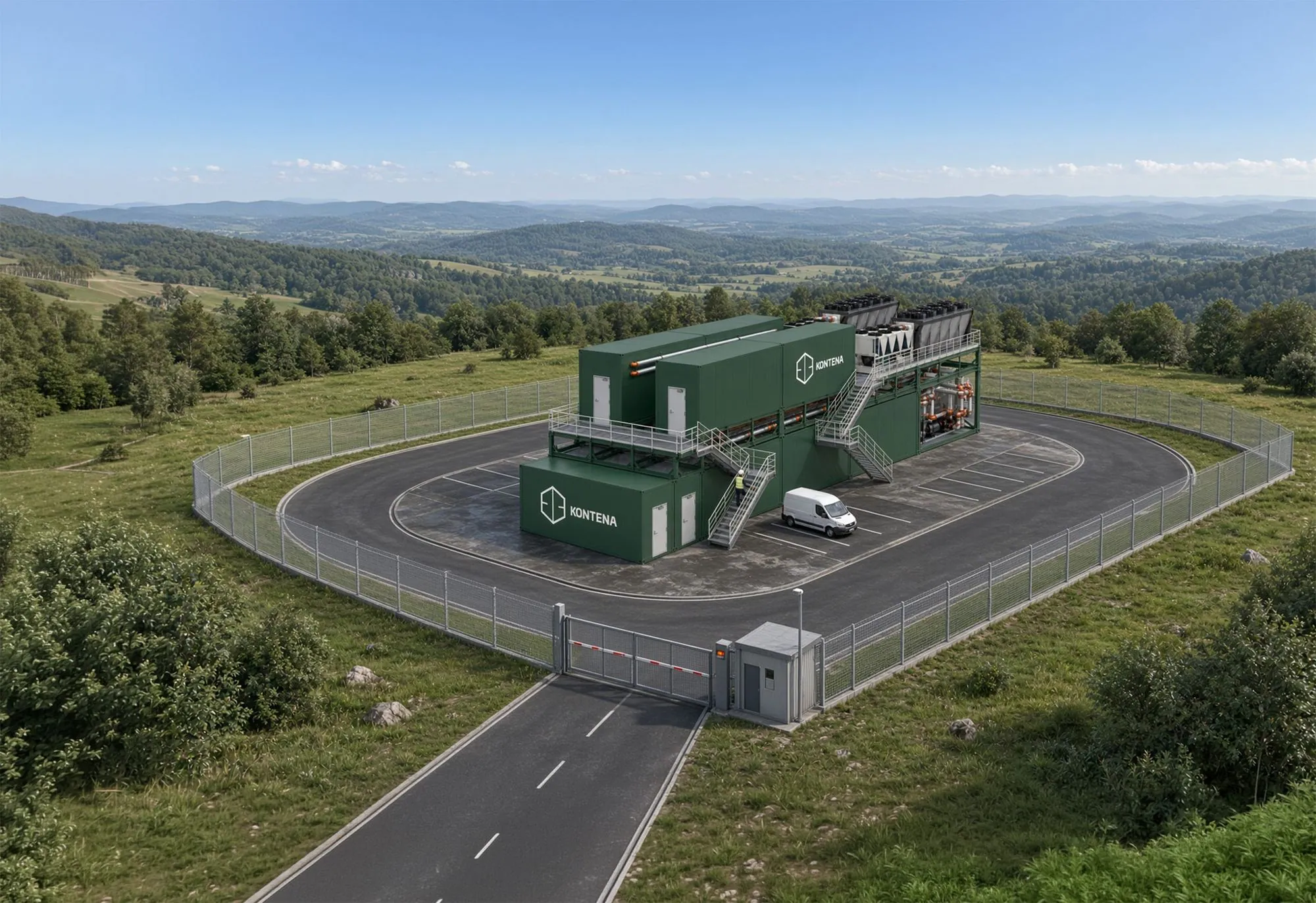
One fixed block, repeated from site to site: four road-legal modules of 9 x 3 x 4 m and the cooling yard beside them. Nothing critical is built into the site, so when a site changes the block leaves on a truck, as it arrived.
One module with 8 rack positions at about 100 kW on average, 150 kW and above where needed. Direct liquid cooling with a rear door at every position.
The second module: the entrance, access control and the service routes into the whitespace.
Two E-House sections with four UPS of 350 kW on lithium batteries; any three carry the full load. No new transformer and no diesel set in the base design.
Dry coolers and a chiller, N+1, in the yard alongside. Dry coolers only or chillers only where the site and the climate ask for it.
Your site is prepared while the cluster is built and tested in our halls.
Your plot, your grid connection, your racks: we fix the configuration early.
Hall, E-House and cooling platform built in parallel with the site works.
Factory acceptance test around month five: wired, piped and tested.
A handful of loads, set by crane on prepared foundations.
Power, cooling and network hooked up between the modules.
Commissioned, site acceptance tested and handed over.
Exact timing depends on the project.
Typical values. Exact figures depend on the project and the hardware you choose.
Add racks or a second hall without interrupting operation. When the load grows past a few MW, the same factory-built blocks scale up to a full data center.
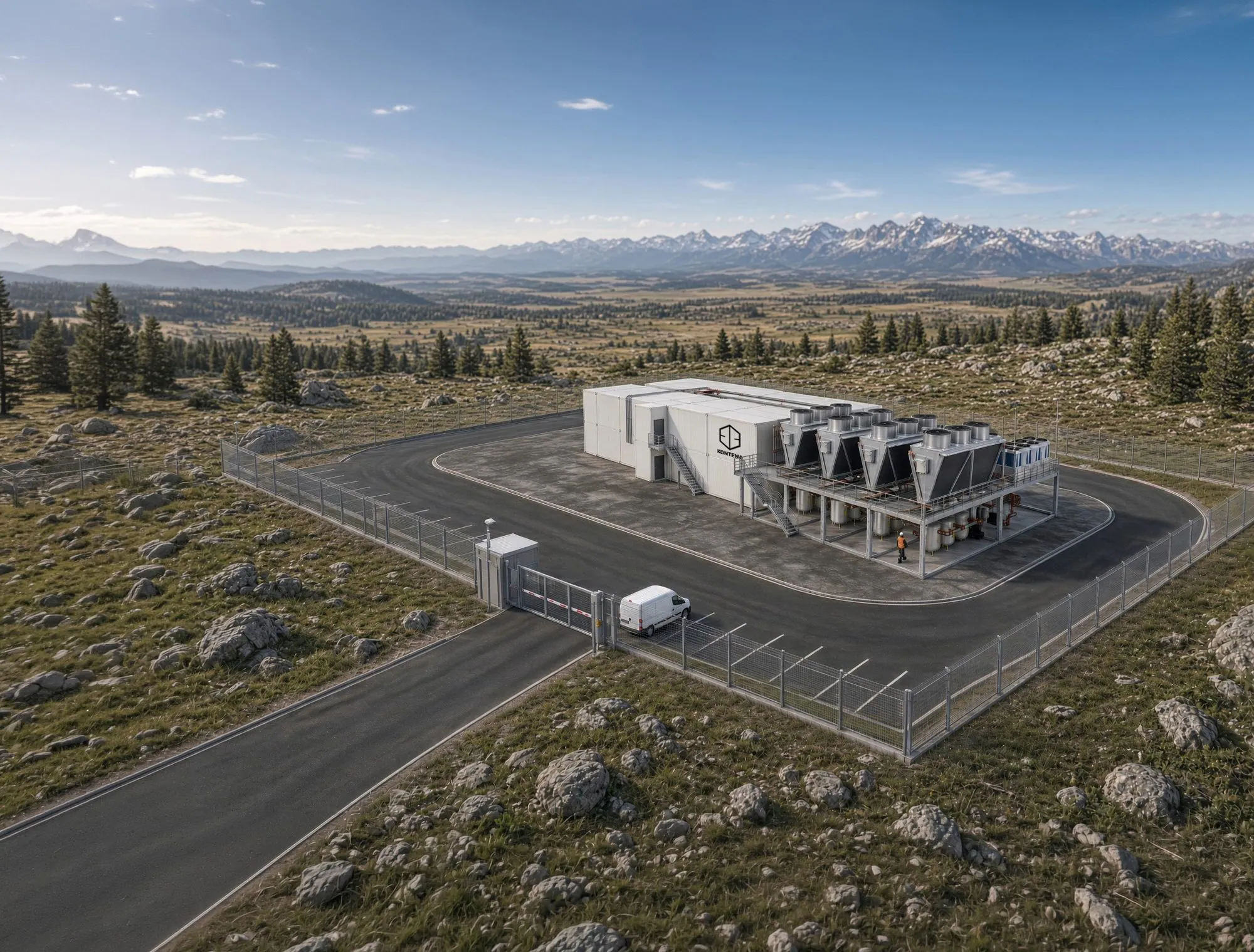
Well-defined projects reach the factory acceptance test around five months after the design is frozen, and go live a few weeks after delivery. Exact timing depends on the project.
Yes. Add racks or a second hall later without interrupting operation. When you need more than a few MW, the Repeatable MDC block takes over.
No. The micro data center stands outdoors on simple foundations. It can also go inside an existing hall.
No. The micro datacenter is built from purpose-built steel modules, not converted shipping containers, so the room, the doors and the utility routes are sized for the hardware rather than for transport.
Any. We are vendor-independent: your racks, your suppliers, your choice.
Yes. Power, water and data connect at bolted and flanged points, and UPS and batteries stay inside the modules. A move is weeks of work with a truck and a standard crane.
We come back with a first configuration and a schedule.
We use necessary cookies to make this site work. With your permission we also use analytics cookies to see how the site is used, and marketing cookies to measure our campaigns. You can change your choice at any time via Cookie settings at the bottom of every page. More in our privacy statement.